
Study strategy6-minute readFor takers who freeze under timed pressure
NMAT anxiety: staying steady in a proctored online test
Manage NMAT anxiety in a live-proctored online test: rehearse under test conditions, use a reset routine, spend the break well and know when to ask for help.
If your mind goes blank when a clock starts, you are not alone, and it is not a verdict on your ability. NMAT anxiety has understandable causes: the test matters for admission, the pace is fast, and it is live-proctored.
This guide offers general wellbeing advice and practical rehearsal ideas. It is not medical advice. If anxiety is affecting your health or daily life, please speak to a qualified professional, and we say more about that near the end.
Why does NMAT anxiety build, and why does the test feel so high-stakes?
The NMAT feels high-stakes because it is a gateway to medical school, it is tightly timed, and the online format adds a live proctor. Each of these is real, and naming them is the first step to managing them.
The Center for Educational Measurement (CEM) describes the online NMAT as 240 multiple-choice items in two parts: 120 items in 2 hours 15 minutes, a 10-minute break, then 120 items in 1 hour 30 minutes. Part 2 averages 45 seconds an item, so a bad stretch can feel costly.
The test is also reported as a percentile rank, not a pass or fail, and schools set their own requirements. That can ease the pressure of an imagined single cut line. Our percentile guide explains how rank is used.
Finally, CEM's test-day rules say your webcam and microphone stay on and a live proctor watches. Feeling exposed under those conditions is normal, and practice makes it ordinary.
How do you practise under proctor-like conditions?
Practise by climbing a ladder of conditions, from relaxed to realistic, so that test day is the last rung rather than a leap. Anxiety grows with the unknown, and each rung makes one more thing familiar.
| Rung | Condition | What it trains |
|---|---|---|
| 1 | Untimed set at your desk | Method and confidence |
| 2 | Timed set, phone out of reach | Pace and focus |
| 3 | Timed Part block with the break kept to 10 minutes | Stamina across a full part |
| 4 | Timed set with your webcam on and the room set up | Comfort with being watched |
| 5 | Full exam at your likely start time | The whole routine, end to end |
Move up only when the current rung feels manageable. If rung 4 spikes your nerves, stay there for a week and repeat it. Ask a friend or family member to sit in the room silently, or to look in occasionally, to mimic a watcher.
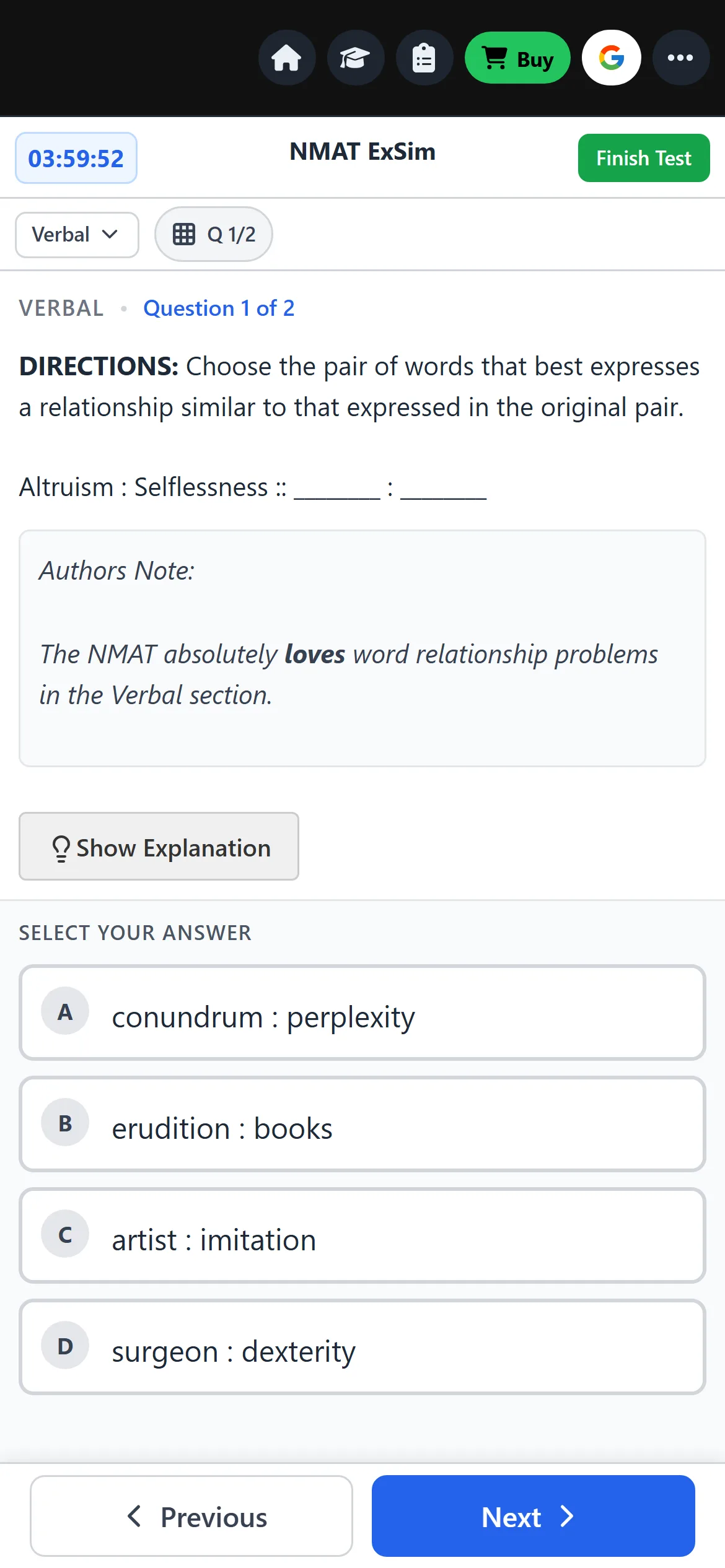
You can try the timer and layout in the free demo, which runs all eight subtests, including on a phone. Our guide to online NMAT rules and setup lists what to prepare so the technical side holds no surprises.
What is a good reset routine when your mind blanks?
A good reset routine takes about 20 seconds, follows the same steps every time, and ends with a decision about the current item. Because it is short and rehearsed, you can use it mid-test without losing much time.
Here is one version:
- Drop your shoulders and unclench your jaw. Tension feeds the blank.
- Breathe out slowly, longer than you breathe in. Two or three slow breaths are enough.
- Name the problem. Say to yourself, "I am stuck on this item," not "I am failing."
- Make a decision. Reread the stem once, or mark the item and move on.
- Start the next item. One miss costs one item. Spiralling can cost ten.
Practise the routine in every timed drill, so it becomes automatic. It also helps to agree a skip rule in advance: if an item has taken twice your average time, mark it and move on. Our time management guide explains the pace numbers and when to skip.
Do not treat the routine as a trick that removes nerves. It is a way to keep nerves from taking over your decisions.
How do you use the 10-minute break well?
Use the break to reset your body and mind, not to review content. CEM's schedule places a 10-minute break between Part 1 and Part 2, and Part 2 starts with a different set of subjects and a faster pace.
Decide your plan beforehand and practise it in your full-exam rehearsals. Stand if you can, stretch, drink water and breathe slowly. Avoid discussing or rechecking Part 1 answers, because you cannot change them and the worry carries into Part 2.
Check CEM's current Test Day Instructions for what is allowed during the break, including whether you may leave the room or your seat. Do not assume. Plan for the strictest reading and keep your setup undisturbed.
Plan one small, positive thought for the end of the break, such as "Part 2 is shorter and I have practised its pace." It is simple, but a scripted start helps when your head is noisy. Tell yourself the break is for recovery, then use all of it.
What else helps in the weeks before the test?
Sleep, food, movement and a steady routine do more for test nerves than any last-minute trick. These are general wellbeing habits, not treatments, and they support the practice work you have already done.
Keep a regular sleep schedule, especially in the last two weeks. Eat regular meals and drink water. Move your body a little each day, even a walk. Limit late-night studying, which tends to shorten sleep without adding much recall.
Keep your preparation visible. A written plan, such as the one in our 8-week study plan or our last-month guide, turns vague dread into a list of tasks. Tick items off.
Watch your self-talk. After a practice exam, compare it with your last one, not with another person's result. Progress on your own error log is the honest measure, and it is within your control.
When does anxiety need more than self-help?
Anxiety needs more than self-help when it disrupts your sleep, appetite, studies or daily life, or when it brings panic attacks, constant dread or thoughts of harming yourself. In those cases, please contact a qualified professional.
Options include your school's guidance or counselling office, a doctor, or a licensed mental-health professional. Telling a trusted friend or family member also helps, and you do not have to wait until the test is over. If you ever feel unsafe, contact local emergency help or someone you trust right away.
If you have a diagnosed condition, or you may need accommodations for the test, ask CEM directly, using the contact details on its NMAT pages, about what arrangements exist. We do not state what accommodations are available because we have no sourced information on that.
Asking for help is a practical decision, in the same category as hiring a tutor for a weak subject. Seeking support early usually makes preparation easier.
Frequently asked questions
How do I stop blanking during the NMAT?
Use a short reset: drop your shoulders, breathe out slowly, name the problem, then reread the item once or mark it and move on. Practise it in timed drills so it is automatic. A rule to skip any item that has taken twice your average time also prevents one blank from eating a whole section.
Is it normal to feel watched during the online NMAT?
Yes. CEM states that the test is live-proctored and that your webcam and microphone must stay on, so feeling observed is a natural response. Rehearse with your camera on and someone briefly in the room, and the feeling usually fades with repetition.
Do full practice exams help with anxiety?
They can. A full timed exam rehearses the pace, the 10-minute break and the whole routine, which reduces the unknown. We cannot promise that anxiety disappears, because people differ. Climb gradually, review each exam calmly and stay at a rung until it feels manageable.
Should I see a professional about test anxiety?
Consider it if worry disrupts your sleep, concentration or daily life, or if it leads to panic or constant dread. A school counsellor, doctor or licensed mental-health professional can assess what is happening and suggest support. Early help is a sensible step, not a sign of weakness.
Sources
From the publisher
Meet the NMAT clock here first.
Ultimate NMAT is an NMAT simulator: full-length practice exams and subtest drills in all eight NMAT subtests, sat on a clock, with an explanation behind the items instead of a bare answer key.
- 4,670 practice items in all eight NMAT subtests
- nine full-length practice exams (A to I), 2,320 items
- eight subject drill tracks of ten sets each, 2,350 items
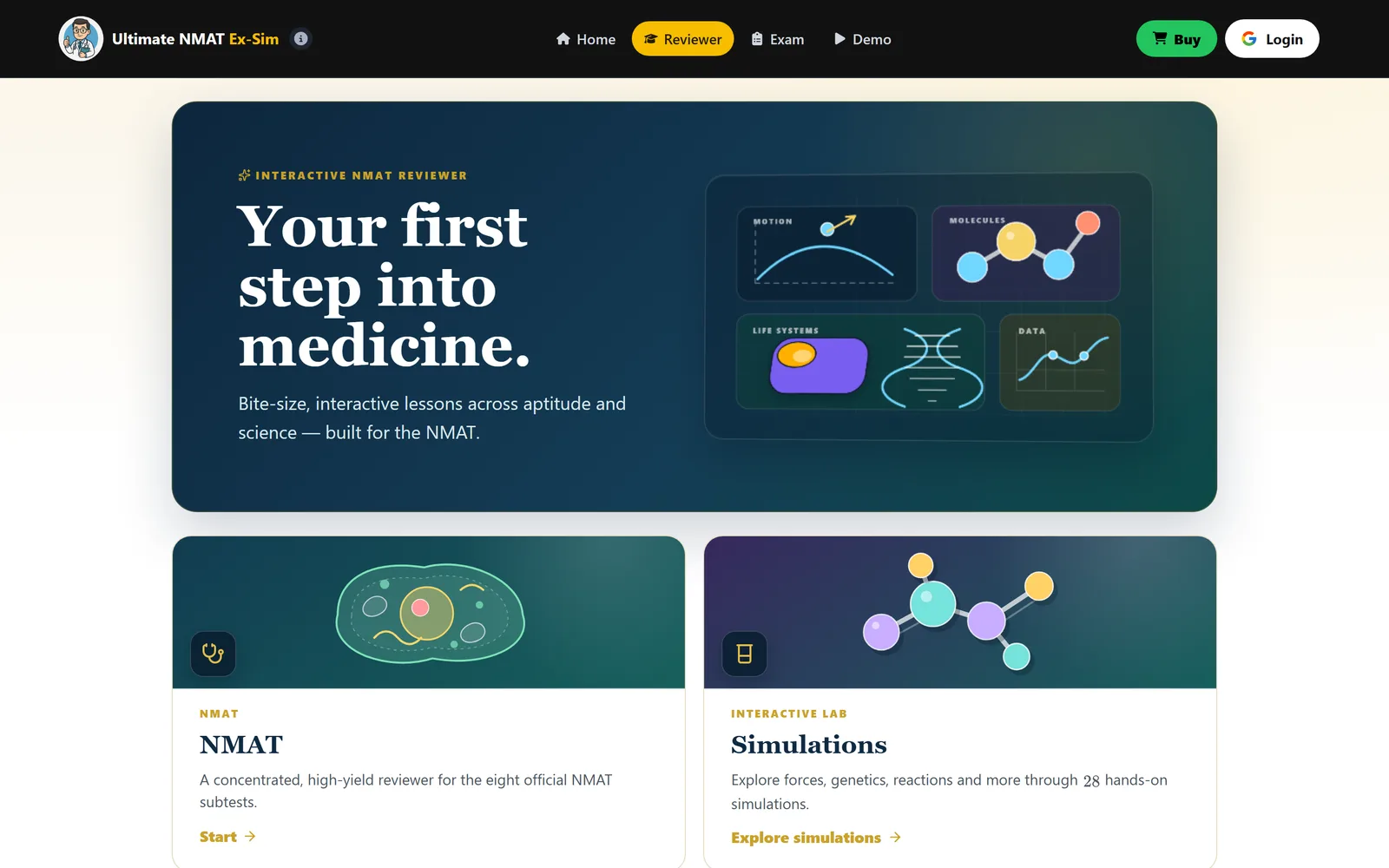
- An interactive reviewer and simulation lab beside the question bank
Try the free NMAT simulator demo A short sample in all eight subtests. No account needed.
About this article
Written by the Ultimate NMAT editorial team, who build the Ultimate NMAT Ex-Sim. Exam facts are checked against the Center for Educational Measurement (CEM) test pages and the CHED issuances CEM cites, and every article lists its sources. How we write and check our articles.
First published .